Personal Stories Through Portrait Artwork
Portrait Tattoos in Queens, NY
Discuss a meaningful portrait concept with careful attention to detail.
Personal Stories Through Portrait Artwork
Discuss a meaningful portrait concept with careful attention to detail.
A portrait tattoo can honor a loved one, preserve an important memory, or represent a person or animal with a special place in your life. Because recognition depends on small relationships between features, portrait work calls for thoughtful planning and appropriate reference material.
At Gerlo Style Ink, I encourage clients considering portrait tattoos in Queens to begin with clear photographs and an explanation of the story behind the image. I can discuss composition, placement, tonal direction, and which parts of the original photograph are most important to preserve.
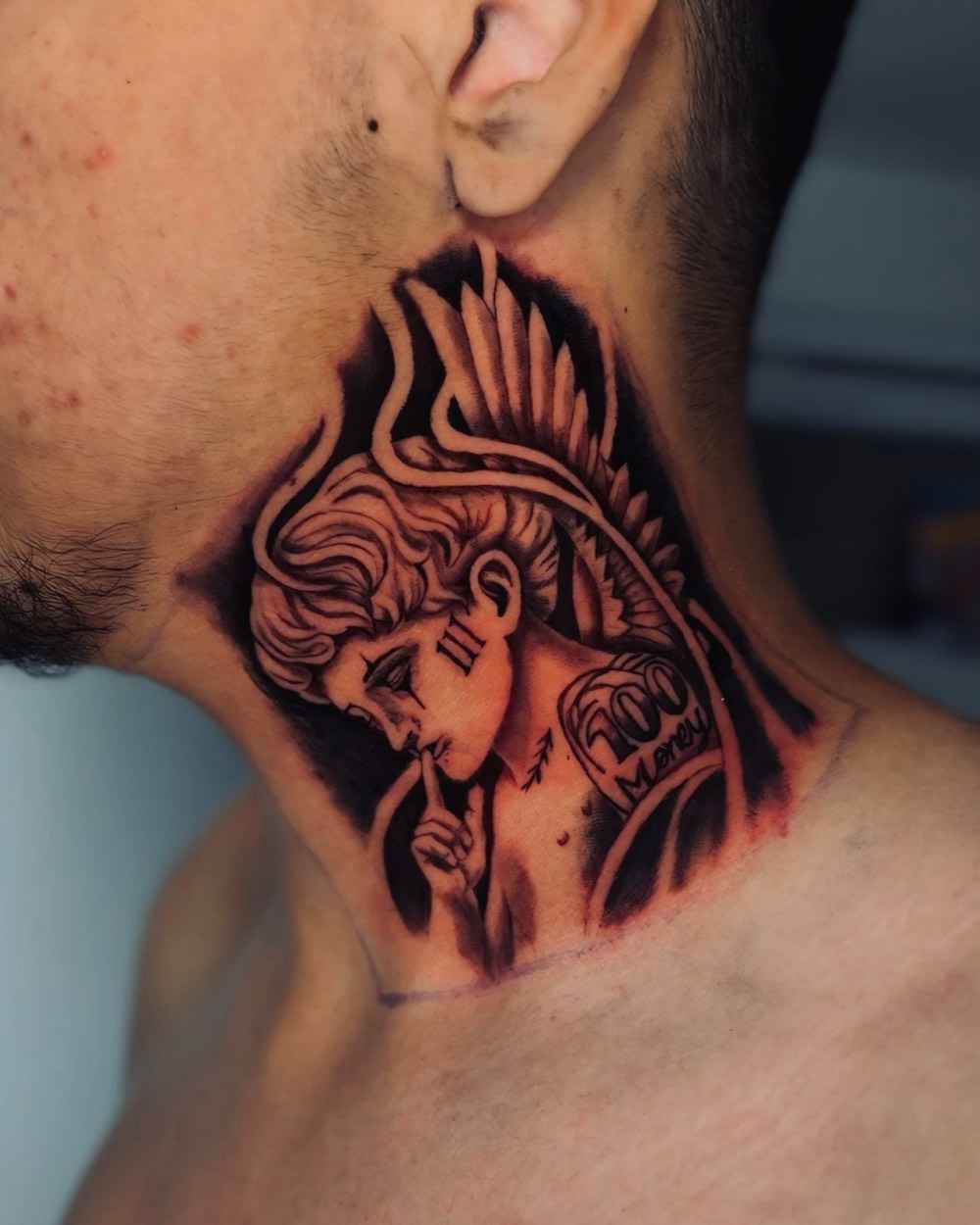
A portrait is not simply a collection of facial features. Small differences in proportion, expression, and lighting can change how the subject is perceived. The placement of the eyes, the shape of the mouth, and the relationship between highlights and shadows all contribute to recognition. The quality of the reference image matters. Photographs with sharp details, balanced lighting, and minimal distortion are generally easier to evaluate. A blurred, heavily filtered, or extremely low-resolution picture may make important features difficult to interpret. When an old family photograph is the only available reference, the limitations should be discussed before finalizing the concept.
Portraits of parents, grandparents, children, and other loved ones often carry strong personal meaning. I encourage clients to choose photographs that capture a familiar expression rather than focusing only on formal appearance.
Memorial tattoos may include a portrait with a name, date, symbol, or personal object. A balanced composition helps the portrait remain the main visual focus while preserving the supporting details.
Animals have distinct markings, expressions, and features that can carry emotional importance. Clear photographs of the eyes, face, and coat patterns help establish the subject's character.
A portrait may be accompanied by flowers, meaningful scenery, or other imagery. Background elements should support the subject without overwhelming the recognizable facial details.
I consider whether the available photograph provides enough information for the intended artwork.
I understand that portraits can represent important personal relationships and memories.
I focus the design conversation on recognizable proportions, expression, and tonal relationships.
I discuss the limitations of available space, photograph quality, and fine detail rather than promising exact photographic reproduction.
Send the photograph you are considering, your preferred placement, and any meaningful details to begin a portrait discussion.
Free — no obligations
Choose clear images that show the expression and features you want represented.
Tell me whether the portrait is commemorative, decorative, or connected to a particular memory.
Consider how much space is needed for recognizable details and whether supporting elements belong in the design.
Discuss any issues caused by low image quality, complex lighting, or very small dimensions.
Review the intended direction and appointment arrangements before proceeding.
Look for clear facial features, useful lighting, and an expression that feels true to the subject. Avoid relying only on heavily edited or blurry photographs. Multiple reference images may help explain important details.
It may be possible to develop a concept from an older image, depending on its clarity. Missing detail, damage, or strong shadows can limit what can be interpreted accurately. The reference should be reviewed before making assumptions about the result.
Yes. Lettering, dates, and personal symbols can be considered as part of the composition. Their size and location should support the portrait instead of crowding important features.
Both require recognizable proportions, but animals may depend heavily on coat markings, ear shape, muzzle structure, and eye expression. Choosing photographs that show those details clearly is important.